



The Summer Spend Event is on!
Get $10 ExtraBucks Rewards® when you spend $30+ on summer essentials.*

Extra Big summer savings

Don’t miss these Extra Big Deals!
Deals so extra, they can’t be missed. But hurry, they’re not here for long!

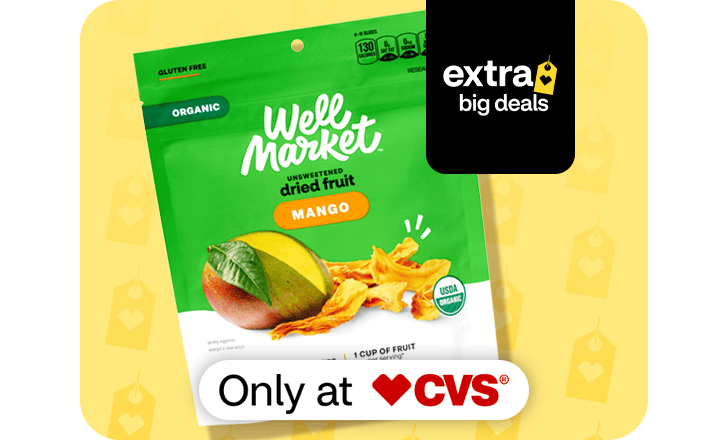
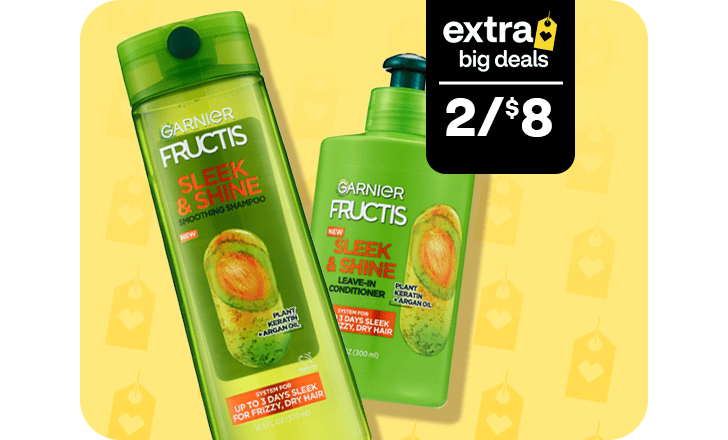
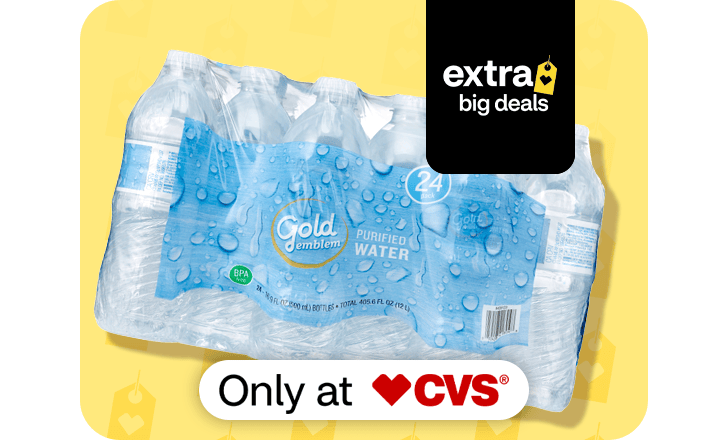
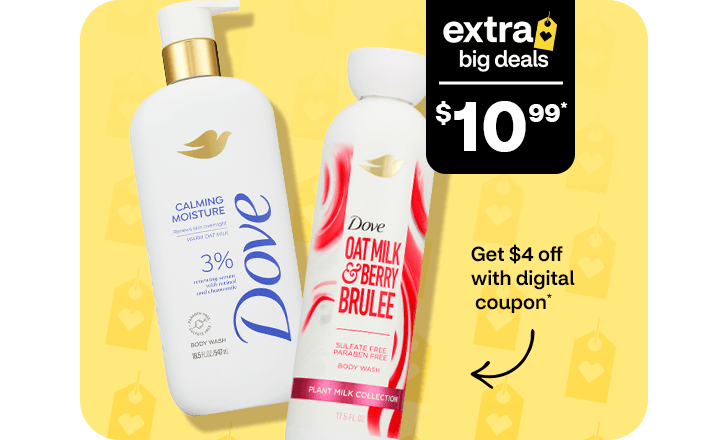
Summer on at CVS®

Save all summer long
Find great deals on summer essentials, from sun care to lawn games, pool toys and more.

So many ways to save
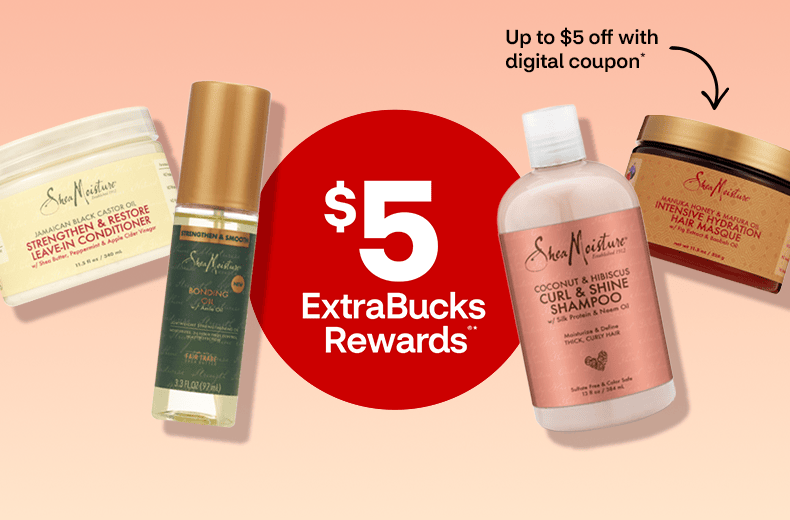
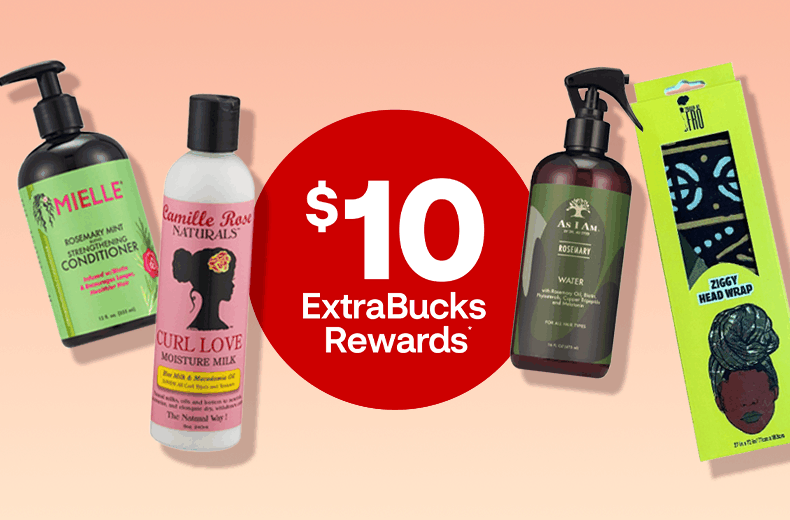
$10 ExtraBucks Rewards
when you spend $30 on select beauty buys from Mielle, As I Am and more.*
Shop Mielle, As I Am & more
Get up to 70% off photo products*
Plus, shop 50+ same-day photo products with FREE CVS® Pickup.
Shop CVS PhotoSo many ways we’re here for you
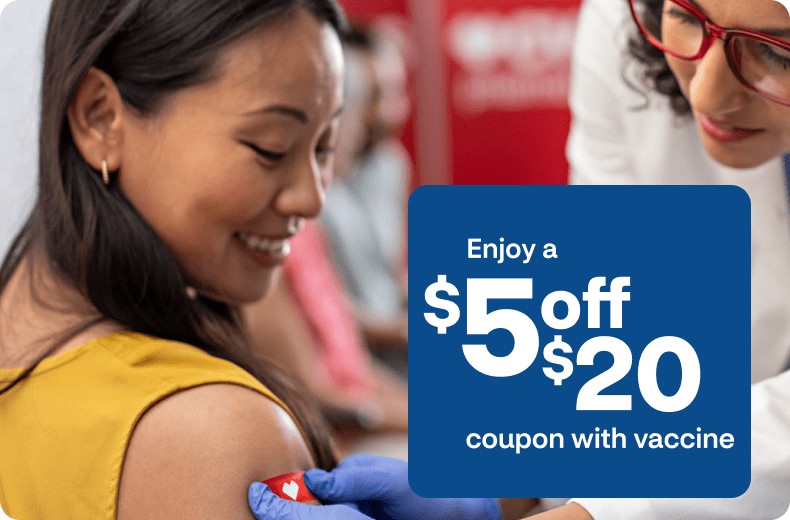
Need a flu shot? Beat the rush, book today.
Schedule your flu shot for the fall and get a $5 off $20 coupon after your vaccination. No cost with most insurance. Restrictions apply.
Book a flu shot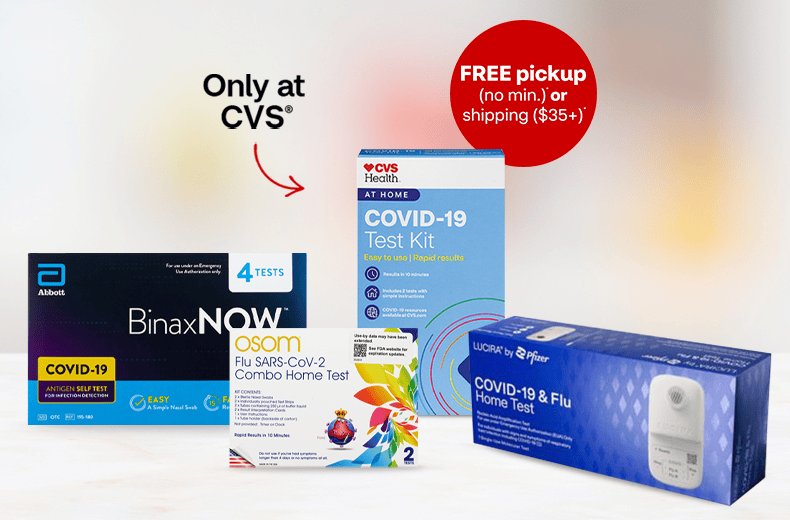
At-home COVID-19 and flu tests
Convenient and simple solutions for testing for COVID-19 and flu. Use FREE CVS® Pickup to get yours in as little as an hour.*
Shop at-home COVID-19 & flu tests
Save a little extra with ExtraCare
ExtraCare has two tiers of savings for you!
Discover all the ways to saveShop your way
Same-day delivery is here!
Get your online order delivered in as little as three hours. Available in most areas*. Join ExtraCare Plus™ to get FREE same-day delivery.
Learn about same-day delivery
Try FREE CVS Pickup today!
Get your order in as little as one hour when you order online and pick up in store. Available at most locations.*
Learn more about CVS Pickup
Save time with Rx Delivery
Get Rx and everyday essentials delivered right to your door.*
Refill Rx now
Save a little extra with ExtraCare®
ExtraCare has two tiers of savings for you!
Discover all the ways to save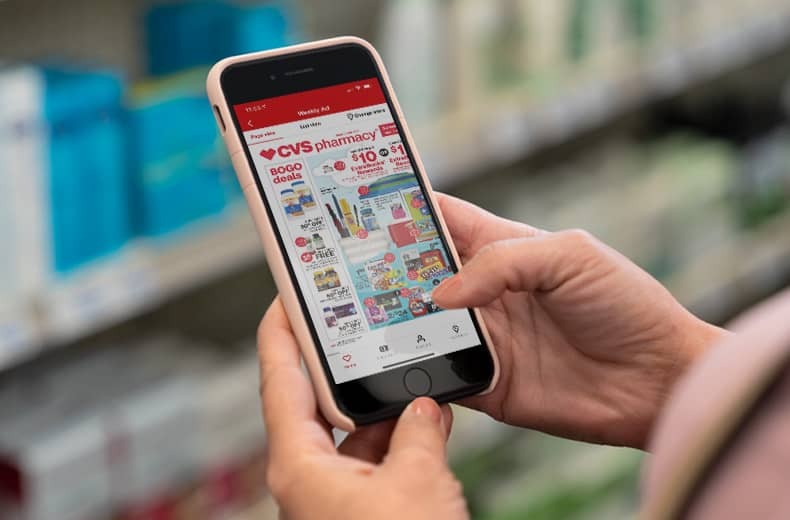

- *FOR BOGOS & EXTRABUCKS REWARDS OFFERS: *Buy 1, get 1 free; Buy 1, get 1 50% off; instant savings; buy more, save more; and ExtraBucks Rewards® promotions expire June 21, 2025 at 11:59 PM ET. Buy 1, get 1 free; Buy 1, get 1 50% off; instant savings; and buy more, save more offers valid within each brand only. You must put both items in your basket; savings will be applied at checkout. ExtraBucks Rewards offer limit of 1 per household with card.
- *FOR ORDER PICKUP: Simply place your order online and we'll have it waiting for you at the store in as soon as one hour. Colleagues will begin packing orders 30 mins after store opening. 24 hour stores will begin packing orders at 7am. Any order placed by 8:00pm will be ready the same day. If a store closes prior to 8:00 pm, orders placed 90 minutes before store closure will be available same day. If a store closes less than 90 minutes after 8:00pm, orders placed 90 minutes before store closure will be available same day. Holidays may impact store pickup availability hours. CVS reserves the right to limit the quantity of items ordered for pickup, as well as the days of the year and daily hours this service is offered. When your order is ready, you'll receive a "Ready for pickup" email (separate from your order confirmation email) with additional instructions. To pick up your order, go in the store’s checkout counter and ask a colleague for assistance. After picking up your order, we'll send a "Your order was picked up" confirmation email.
- *FOR ORDER SAME-DAY DELIVERY: Same-day delivery is available in as little as three hours for retail orders with an eligible address. The minimum order total required for Same-day delivery will be visible upon checkout. Orders must be placed four hours prior to the store's closing time or by 8 PM for 24 hour stores. If you order outside of these hours we will deliver the following day. Some orders may not be eligible for Same-day delivery due to delivery address, holidays, weather or other delivery constraints. Customers are not required to be present for deliveries. The delivery window is only an estimate and may be subject to delays. Delivery is not available in all locations, including Puerto Rico and Hawaii. CVS® reserves the right to limit the quantity of items ordered for Same-day delivery. When your order has been picked up by our trusted courier partner, you will receive a "your order is on the way" email (separate from your order confirmation email). After your order has been delivered, we will send a "your order has been delivered" email.
- *FOR FREE SHIPPING: Free 1 to 4 day shipping applies to a nonprescription order that totals $35 or more after all discounts have been applied. Select items may not be eligible for 1 to 4 day shipping. There may be an additional shipping and handling surcharge associated with particular items in your order. You will be notified of any such charges during checkout if they apply to items in your order. Learn more about 1 to 4 day shipping.
- *FOR COVID-19 HOME TEST SELECT INSURANCE CLAIM: The Federal Government announced that the public health emergency addressing COVID-19, (PHE) ended May 11, 2023. As a result, individual insurers and their clients can now make coverage decisions based on what’s best for their individual plan designs. Customers and patients should check with their insurer for information about current coverage to determine eligibility for at-home tests. At-home COVID-19 tests are excluded from all coupon discounts and promotions, including ExtraBucks Rewards.
- *FOR FREE RX DELIVERY OFFER: Free 1 to 2 day Rx delivery applies to orders until further notice. Delivery is available for eligible prescription drug orders with qualifying prescription benefit programs and insurance plans. Order cutoff times may vary by delivery option and pharmacy location. 1 to 2 day delivery only available on orders placed Monday through Thursday. Delivery may be subject to delays. Not all delivery options are available to every address or from all pharmacy locations (CVS Pharmacy®, CVS Pharmacy at Target, CarePlus CVS Pharmacy® and Navarro® locations). Delivery fees apply and may vary by delivery option and location. Delivery of select nonprescription items is available with prescription delivery at participating locations. Nonprescription items are not available for delivery from CVS Pharmacy at Target locations. Selection of nonprescription items available may vary for online and in-store orders. Nonprescription items are charged at online prices, which may vary from store prices. Coupons, ExtraBucks Rewards® or in-store promotions with delivery may not be used with delivery orders. Online promotions cannot be used nor ExtraBucks Rewards earned with orders called into stores. Advance payment by credit, debit or FSA/HSA card required. In most cases, FSA/HSA cards may not be used for delivery fees. Other restrictions apply. Get details.
- FOR 2% BACK: ExtraCare® card required. 2% back in ExtraBucks Rewards® on qualifying purchases of $0.50 or more in store or online. 2% calculated on purchase price, minus coupons, discounts and third-party fees (if applicable), and before tax. 2% back in ExtraBucks Rewards will be accessible after each transaction in the CVS Pharmacy® app or on CVS.com® and are available to redeem on your next purchase in store or online. ExtraCare members who do not elect to redeem rewards using a digital method will receive a quarterly printout of their accumulated rewards balance (minimum purchase may apply). For digital users, ExtraBucks Rewards that are unused and have not been sent to their ExtraCare card will be reissued via printout at the end of the quarter (minimum balance may apply). 2% back in ExtraBucks Rewards cannot be earned on purchases for alcohol, bag fees, bottle deposits, bus and transit passes, certain CVS Optical® purchases, CVS® Photo purchases (in store or online), CVS promotional items, donations, faxes, gift cards, hunting and fishing licenses, lottery tickets, milk (where required by law or regulation), money orders, newspapers and magazines, packaging services, photo copies, postage stamps, prepaid cards, prepaid phones and accessories, prescriptions and copays, pseudoephedrine/ephedrine products, purchases fulfilled by DoorDash or other third parties, rug doc rentals, and any imposed governmental fees or items reimbursed by a government health plan. Limit of $5 ExtraBucks Rewards for any single transaction with maximum of five qualifying transactions and $25 ExtraBucks Rewards per day per card. In order to receive ExtraCare earnings for purchases made through qualifying third-party shopping services (e.g., Shipt and Instacart), you must have a valid, accurate and up-to-date ExtraCare membership and correctly enter your card number; earnings on these transactions will be shown on CVS.com or in the CVS Pharmacy app and may take up to 48 hours to appear. See coupon for expiration date and requirements to redeem. 2% back in ExtraBucks Rewards offer subject to all applicable restrictions on redemption and use. Terms and conditions apply.