How exercise improves mental health through happiness
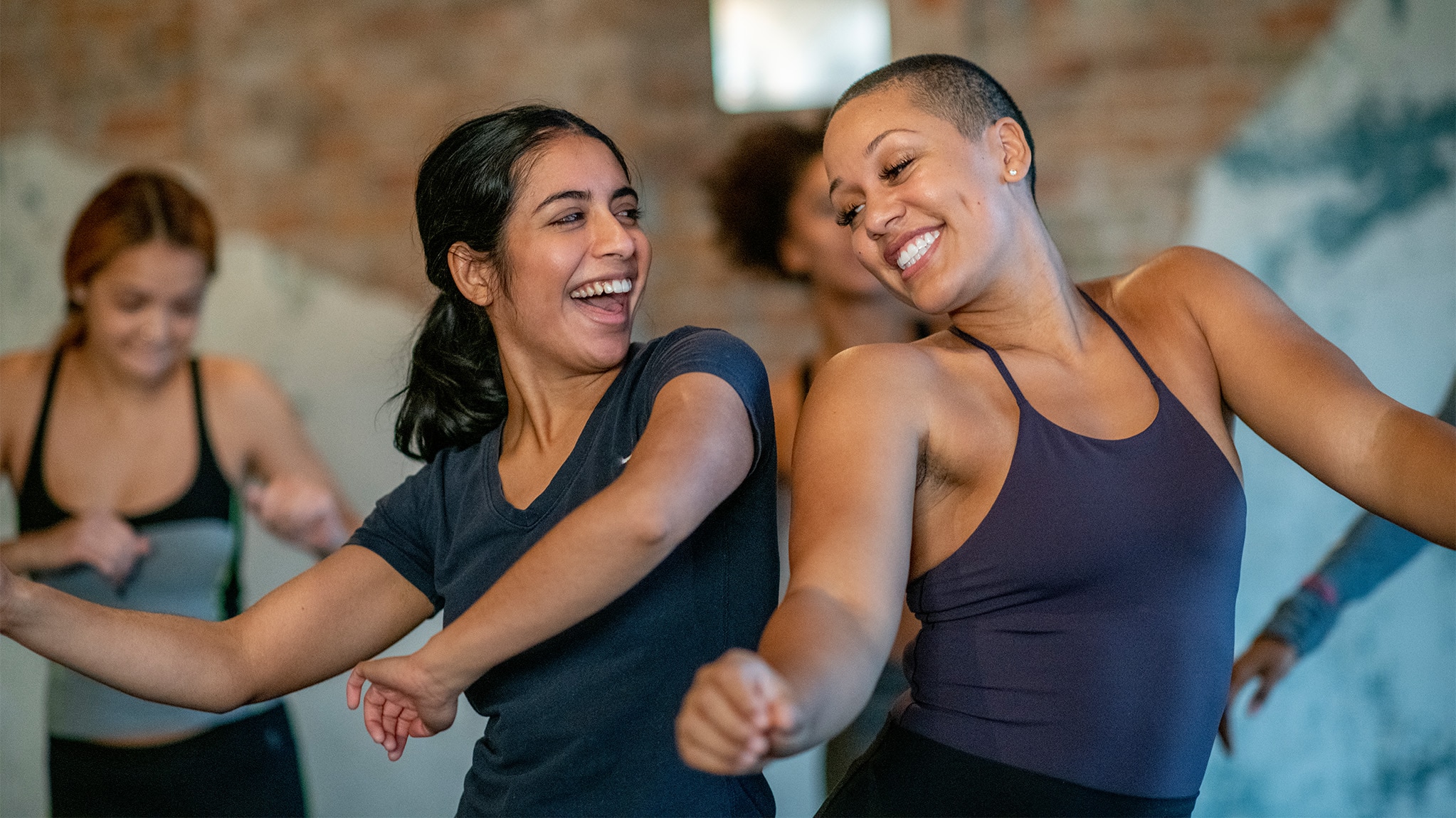
It’s time to retire the idea of “no pain, no gain.” Instead, infuse your physical activity and regular exercise with fun, feel-good moves that may provide mental health benefits.
New research shows that some types of exercise can offer mental health benefits. You can follow the science by incorporating these movements into your routine.
In this article:
Advice on exercise and mental health
It’s easy to dread your time at the gym. But some health psychologists, such as Kelly McGonigal, PhD, believe that a fitness routine should be infused with joy not dread. It’s only recently, notes McGonigal, a lecturer at Stanford University and author of The Joy of Movement: How Exercise Helps Us Find Happiness, Hope, Connection, and Courage, that the idea is finally being taken seriously and getting mainstream attention.
McGonigal’s Joy Workout, for instance, was designed “specifically to make people feel happy,” she says. It showcases moves that are reminiscent of how children move their bodies in wide, jubilant gestures and rhythmic motions. Some research has shown that recreating “happy” movements with your own body can positively affect your mood. Across cultures, McGonigal says, certain movements both express and elicit joy: reaching your arms over your head, swaying from side to side, bouncing to a beat and spinning with arms outstretched.
McGonigal proposes that movements can inspire other positive feelings — whether it makes you feel powerful, fierce, free, tough, calm or connected. And even better, she says: Those feelings have meaning even once your workout is done.
“If I feel strong while I am lifting weights, I develop the belief that I am stronger than I thought I was—and then the next time I come across a challenge, I will feel strong enough to handle it,” she explains. That’s just one way that movement can help you bring about a positive mental state.
How does exercise improve mental health and improve mood?
During aerobic exercise, the brain releases a type of molecule called an endocannabinoid. These natural, cannabis-like chemicals can have a positive effect on well-being and may help ease depression and anxiety. Other changes can happen in the body following exercise, and if not all of them directly affect mood, many are things you ought to feel good about.
For one, exercise has the potential to help you manage blood pressure. Other benefits of regular exercise can include improved brain health; strengthened bones; improved sleep; lower risk of heart disease, stroke, type 2 diabetes and some cancers; and reduced of pain from arthritis.
Additional psychological and emotional benefits may also pop up along the way. For instance, regular exercise and physical activity may create opportunities for you to interact or socialize with others who share your goals, either at your local gym or taking a power walk around your neighborhood. A wave or a smile to a fellow exerciser can go a long way in helping your mood.
How to incorporate happiness into your exercise program
You can adopt a few tips and strategies to help make happiness a priority in your own exercise program. Try these:
Get inspired by old pleasures
“If you can think of a form of activity you enjoyed previously in your life, ask yourself what version of that is possible now,” says McGonigal. Whether it’s swimming or going on swings, “reclaim the activity that used to bring you joy,” she says.
But don’t feel like you need to overcompensate. “Maybe you go rock climbing at the gym for the first time but you don’t like it,” says Jennifer Walsh, a New York City-based wellness advocate who develops wellness programs and organized walks for corporations, individuals and groups. “Chalk it up to a once-in-a-lifetime experience and do something different the next day, like taking a simple walk.”
Give your body credit where it’s due
Activity isn’t the exclusive domain of the young and fit, McGonigal notes. Rather than fixate on physical limitations (“I can’t run five miles!”), focus on what movement your body can do — which can include simply swaying to music — and incorporate that into your workouts. “Movement in any way should be looked at as this great gift that can bring such powerful joy and awe into our lives,” Walsh says.
Incentivize yourself for instant gratification
Choose any one of these three ways to feel good during any activity: add music, do it in nature or have other people join you. Why? Music is a “powerful evoker of joy,” according to McGonigal, and can help with the release of dopamine and endorphins. So-called green exercise, which takes place outdoors, can make people feel less depressed or anxious in a unique way and they may experience better mental health. Finally, you can use movement as an opportunity to connect with other people via play, competition or even just moving in the same space, like during a dance class.
Track your progress in a new way
For a more joyful time exercising, McGonigal suggests skipping tracker devices. Instead, “take a selfie that expresses the best part of your workout or a photo of an intricate leaf you collected on your nature walk. Or use a single word to describe how you feel afterward. Track that to create a mind shift toward joy.”
Consider at-home workouts
Creating a space where you feel safe and inspired to move your body can also help shift your mindset and help you enjoy your workouts more. If you decide to incorporate some exercise weights and accessories into your workout routine, consider these products:
- Neoprene hand weights, 10lb, single: If you prefer doing bicep curls, overhead presses or just walking around with some additional heaviness in hand, these non-slip neoprene weights are great for adding a little resistance to your movements.
- Gaiam 10mm fitness mat, black: Lay on it, stretch on it, stomp on it or dance on it. A fitness mat — like this super thick one by Gaiam — can provide comfort and cushioning for your bones and joints while you exercise (even if you choose to just roll around on the floor to your favorite song. Yes, we’ve all been there).
- Trademark Home EVA foam exercise mat, multi color: Need more space for all that rolling around? This mat made up of 12.4-inch by 12.4-inch interlocking pieces lets you build a custom space to move and groove on. Bonus: It protects your floors and can be easily packed away when not in use.
- TheraBand latex exercise bands: With eight color-coded levels of resistance, you can choose your effort level. Just be sure you know how to use them before getting started — you can accidentally snap yourself in the head if you use them improperly.
- TheraBand standard exercise balls: This inflatable exercise ball is great for improving your strength and can, of course, also simply be used for fun and games. If working out is your goal, this product also comes with 24 exercises you can try.
*This content is for informational purposes only and is not medical advice. Consult with your health care provider before taking any vitamins or supplements, and prior to beginning or changing any health care practices.