Choosing the right heart rate monitor
Staying in peak shape? Keeping an eye on stress? A heart rate monitor can help with almost any wellness plan.
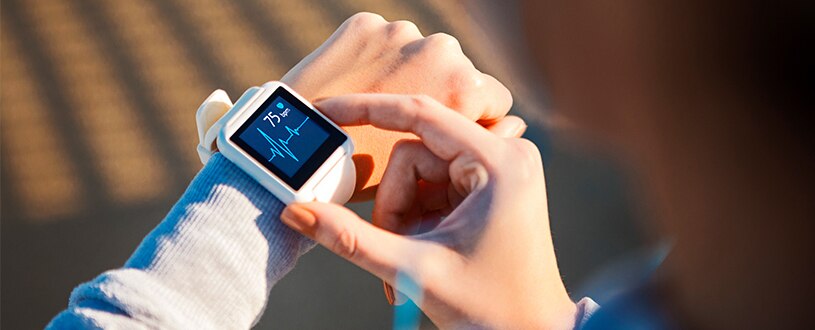
Health and wellness are becoming more and more digital. That means heart rate monitors are popping up everywhere — on exercise equipment, smart watches and cool new workout gadgets.
A heart rate monitor is a device that measures the number of times your heart beats per minute (bpm).1 That information can tell you lots of important things. Like when to ramp up your workout or if you should talk to your health care provider about your heart rate.
With so many options on the market, shopping for a heart rate monitor might be a little confusing. Read on to learn why tracking heart rate is important and things to consider when selecting a heart rate monitor.
In this article:
Why is heart rate important?
Heart rate can tell you a lot about your physical state. Healthy adults have a recommended resting heart rate — the heart rate when you’re relaxed and inactive — of 60 to 100 beats per minute (bpm). This range tends to be on the lower side for athletes and avid exercisers.2
A number of factors can affect your heart rate, including caffeine, health conditions, medication and stress. Emotion can affect your heart rate, too. Heart rate also fluctuates throughout the day, especially with exercise.
On the exercise front, measuring your heart rate as you work out can serve a different purpose: helping you find the right intensity — or target heart rate. Depending on age and fitness level, most adults should aim to exercise in a target range of 75 to 170 bpm.3 Your health care provider can help you determine an appropriate target.
No matter what you’re doing, if your heart beats too quickly or too slowly, it can be dangerous. That’s why providers recommend a heart rate monitor for some people, explains Anita Chandrasekaran, MD, MPH, an internal medicine doctor and rheumatologist in Connecticut.4
“Often that includes people who are newly starting to increase their physical activity; those who have symptoms during activity, such as palpitations, in which long-term heart rate monitoring may be helpful; and those who simply need reassurance that their heart rate is normal,” says Dr. Chandrasekaran.
Although she feels heart rate monitors are a good screening tool, she also explains that it’s important not to jump to conclusions about results.
“While these devices can be helpful,” she says, “they aren’t as accurate as approved medical devices, and they shouldn’t be used in place of medical care from a physician.” If you notice abnormal results, she adds, follow up with your provider.
What types of heart rate monitors are out there?
Several types of heart rate monitors are on the market. Over-the-counter products have been designed for a wide range of uses, and include devices worn around the chest, finger and wrist.5
The right monitor for you will depend on how you intend to use it. If you need it to guide exercise, something that lets you move easily is best. For people that want the most reliable and accurate results, explains Dr. Chandrasekaran, a chest band is typically better than a device placed on the wrist.
Helpful features and functions of heart rate monitors
If you’re only interested in measuring heart rate, a device with extra bells and whistles may not suit you. However, many people enjoy tracking multiple aspects of their health and fitness and might want to link that data to smartphone apps.
Dr. Chandrasekaran wears a smartwatch. “It connects to my phone and laptop and also provides the ability to check an electrocardiogram, monitor oxygen levels and monitor my activity levels (like step counts),” she says. “You can also graph heart rate variability, which is an important measure of cardiac health.”
That data doesn’t need to be for your eyes only. Sharing health data with your physician is one way to make use of the device. Remember to check the individual product features of your heart rate monitor and use as directed on the label.
How much do heart rate monitors cost?
Heart rate monitors have a wide price range, depending on the brand, style and capabilities. More sophisticated devices with additional features can run up to $300. In addition, some products include subscription services for ongoing programs — like exercise classes or food logging apps — that involve yearly or monthly charges.
Depending on your health insurance plan, you may have access to discounts. Heart rate monitors may be eligible for payment using a health savings account (HSA), a health reimbursement arrangement (HRA) or a flexible spending account (FSA). Check with your carrier if you have one of these accounts. If your physician has concerns about your heart rate, they may offer to loan you a medical-grade monitor to wear for a specified time.
There are several affordable options to monitor your heart rate. And doing so could potentially save a much higher cost to your health in the long term. It always pays to keep your finger on the pulse of your heart.
This content is for informational purposes only and is not medical advice. Consult your health care provider before taking any vitamins or supplements and prior to beginning or changing any health care practices.
-
1Heart rate monitor. Cleveland Clinic. July 5, 2022.
-
2Target Heart Rates Chart. American Heart Association. March 9, 2021.
-
3Target Heart Rates Chart. American Heart Association. March 9, 2021.
-
4Anita Chandrasekaran, interview, December 2023.
-
5Heart rate monitor. Cleveland Clinic. July 5, 2022.
