Frequently asked questions about vaccines for adults
Immunization recommendations may be confusing. Here’s help in figuring out which vaccines adults may need and when they may need them.
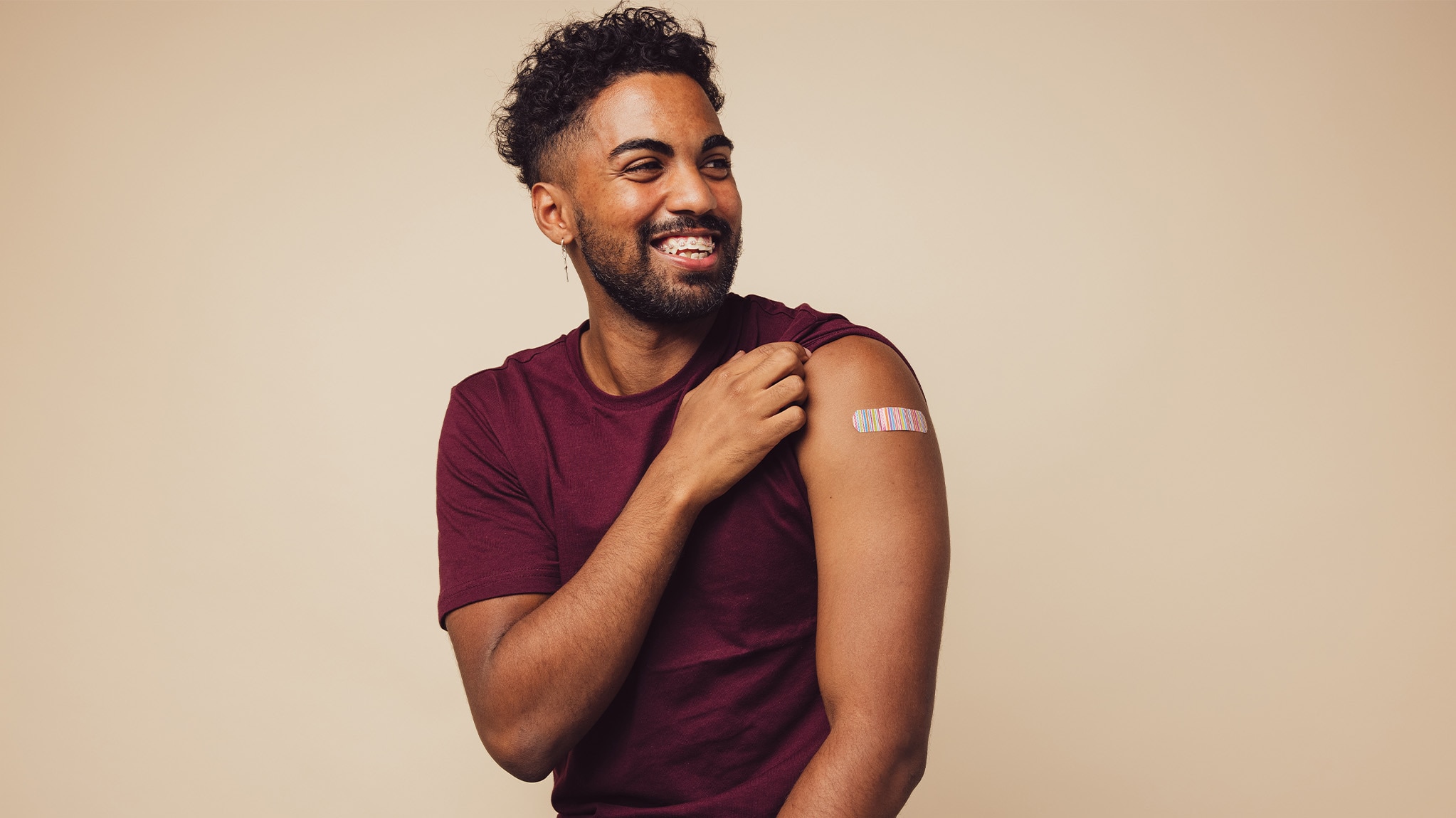
This article is up to date as of April 16, 2025, and based on vaccine guidance provided by the U.S. Centers for Disease Control and Prevention (CDC). Individual states may adopt their own vaccine policies and recommendations based on local public health assessments and regulatory frameworks. For the most up-to-date information, consult your state or local health department or your health care provider.
If someone signed up for a COVID-19 or flu vaccine recently, they might have been asked if they wanted to receive other vaccines as well. Tetanus? Shingles? Hepatitis B? Learn how to confirm current vaccination status and get help to find out vaccine eligibility.
In this article:
Why are vaccines important?
Vaccines play a critical part in helping prevent the spread of infectious diseases. They can help safeguard people against getting severely sick — or even dying — and can provide protection against dangerous complications caused by these preventable diseases.
If someone works or spends time in large group settings, getting vaccinated can also help protect the entire ecosystem of people who are part of that institution. Certain state laws may mandate vaccines for specific groups, including health care workers in facilities with vulnerable people (e.g., hospitals and nursing homes), children in day care or school and young adults in college. These laws vary from state to state.
How to help avoid getting sick
Vaccines are the most effective part of protection against infectious disease. They provide an important contribution to an overall larger precautionary strategy. Also, with infectious diseases that can be spread through respiratory droplets, high-quality masks provide a physical barrier that serves to help protect ourselves and others.
Using a layered approach works best. “In addition to getting vaccinated and taking other precautions, we should also support our immune system by eating healthy, getting enough sleep, finding ways to address stress and optimizing our health by controlling any chronic conditions, like high blood pressure or diabetes,” says Farshad Fani Marvasti, MD, MPH, associate professor and director of public health, prevention and health promotion at the University of Arizona College of Medicine in Phoenix.
How to get vaccination records
To confirm vaccination history, someone can try contacting their health care provider’s office. The provider may have a record of their previous vaccinations. If they don’t have a regular primary care physician, they may need to do some digging.
Check with parents, look in old baby books and call previously attended schools that required vaccines. People can also look up their state's department of health website to see if they maintain an immunization registry where they may be able to access their immunization records. If they received a vaccine from a pharmacy, they can ask the pharmacy for those immunization records or sign in to the pharmacy’s website to print out the information if this service is available.
If none of that leads to success, there are still options. There are blood tests that can be done to check for immunity against certain diseases, including hepatitis B, measles, mumps, rubella and varicella. If someone received vaccines for these conditions in the past, the tests may be able to pick up the antibody titers (the level of antibodies they have in their blood). “Many universities and some businesses require these antibody titers to verify vaccination,” Dr. Marvasti adds.
If someone doesn’t have sufficient antibodies present in their blood tests, a booster may be recommended. The Centers for Disease Control and Prevention (CDC) may recommend that people get vaccinated if there is any uncertainty around their vaccination history.
Which vaccines can be administered at the same time?
Administering multiple vaccines at once, the CDC says, is generally safe and has several advantages. For example, it can be desirable to limit the number of times patients need to visit their primary care provider’s office or other health care provider. To reduce the number of shots a patient receives during such a visit, some vaccines are offered as combination vaccines — meaning two or more have been combined into a single shot.
For adults, the CDC states that it’s okay to get a COVID-19 vaccine and other vaccines like the measles, mumps and rubella (MMR) vaccine on the same day. The CDC notes that live vaccines — like live attenuated influenza and measles, mumps and rubella (MMR) — can be given at the same time if indicated. If someone has experienced side effects from simultaneous vaccinations in the past, they should check with a health care provider first. It may be possible to split up combination vaccines and get them separately.
Which vaccines are important for adults?
According to the CDC, there are many vaccines recommended for adults age 19 or older. When considering a vaccine, be sure to speak with a health care provider about the age requirements, special situations, guidance around certain medical conditions and spacing between doses if more than one dose is required. (Learn more at the CVS Pharmacy immunization resources page.)
The CDC has a recommended vaccine schedule for children, adolescents and adults on its website. However, the CDC cautions that there are certain instances when people should not get certain vaccines or should at least wait to get them — for example, because of their age, health conditions or other factors. Having a weakened immune system or being pregnant might be reasons to skip or delay certain vaccines. Talk with a health care provider for guidance on all vaccines and when would be the best time to receive them.
Learn more at the CVS Pharmacy immunization resources page.
Here are some CDC recommended vaccines for adults:
Respiratory syncytial virus (RSV)
The CDC began recommending the RSV vaccine for older adults in 2023. RSV can lead to major lung infections like pneumonia and bronchiolitis. The RSV vaccine helps the body learn how to fight the virus during future exposures to help prevent these types of illnesses from developing.
Influenza inactivated (IIV3), influenza recombinant (RIV3) or influenza live attenuated (LAIV3)
- One dose of an age-appropriate influenza vaccine should be received annually.
- The live attenuated vaccine is only suggested for certain adults through the age of 49.
- It is recommended that adults age 65 or older receive an age-appropriate influenza vaccine that is either high-dose or adjuvanted.
Tetanus and diphtheria (Td) or tetanus, diphtheria and pertussis (Tdap)
- One dose of Tdap should be received at or after age 11 and then a booster of Td or Tdap every 10 years (or sooner for certain wound-management situations).
- One dose of Tdap (not Td) should also be received during each pregnancy, preferably in the early part of gestational weeks 27 to 36.
Zoster recombinant (RZV), commonly known as shingles
Two doses of the shingles vaccine should be given two to six months apart to those who are:
- Ages 19 to 49 who have certain immunocompromising health conditions
- Age 50 or older
Pneumococcal (PCV15, PCV20, PCV21 and PPSV23), commonly referred to as pneumonia
There is a wide variety of recommendations for pneumococcal vaccines, which can vary depending on prior vaccination history. Speak with a health care provider to determine the eligibility for a vaccination.
- Ages 19 to 49 with certain underlying medical conditions or other risk factors
- All adults age 50 or older
Other vaccines
Below are some other vaccines that may be recommended for certain people. Speak with a health care provider to determine the eligibility for a vaccination.
- Haemophilus influenzae type b (Hib) vaccine
- Hepatitis A vaccine
- Hepatitis B vaccine
- Human papillomavirus (HPV) vaccine
- Measles, mumps and rubella (MMR) vaccine
- Meningococcal vaccine
- Varicella (VAR or chickenpox) vaccine

COVID-19 vaccines for adults
The CDC recommends that adults stay up-to-date with the most current COVID-19 vaccine, if eligible. Some adults, such as those age 65 or older, may also be eligible for additional doses. A number of COVID-19 vaccines are currently recommended for use by the CDC. CVS® offers a variety of different vaccines.
Where can someone get vaccinated?
Consult a health care provider to confirm the vaccines needed and where to get them. CVS offers a variety of different vaccines. Learn more about the ones that might be appropriate and sign up for a vaccination at CVS all in one place.
This content is for informational purposes only and is not medical advice. Consult your health care provider before taking any vitamins or supplements and prior to beginning or changing any health care practices.
Vaccine availability varies by state based on law. Age restrictions apply. Available when a certified immunizer is on duty.
-
FOR COMPLICATIONS CAUSED BY THESE PREVENTABLE DISEASES SOURCE: Centers for Disease Control and Prevention. 5 reasons it is important for adults to get vaccinated. Published January 1, 2024.
-
FOR HELP PROTECT THE ENTIRE ECOSYSTEM SOURCE: Centers for Disease Control and Prevention. 5 reasons it is important for adults to get vaccinated. Published January 1, 2024.
-
FOR CERTAIN STATE LAWS SOURCE: Centers for Disease Control and Prevention. Vaccination laws. Published May 16, 2024.
-
FOR LAWS VARY FROM STATE TO STATE SOURCE: Centers for Disease Control and Prevention. Vaccination laws. Published May 16, 2024.
-
FOR IMPORTANCE OF VACCINES SOURCE: Centers for Disease Control and Prevention. Explaining how vaccines work. Published August 10, 2024.
-
FOR MASK BENEFITS SOURCE: Centers for Disease Control and Prevention. Masks and respiratory virus protection. Published March 1, 2024.
-
FOR HOW TO STAY HEALTHY SOURCE: Farshad Fani Marvasti, interview, 2022.
-
FOR CONFIRMATION VACCINATION HISTORY SOURCE: Centers for Disease Control and Prevention. Staying up to date with your vaccine records. Published June 13, 2024.
-
FOR CHECK WITH PARENTS SOURCE: Centers for Disease Control and Prevention. Staying up to date with your vaccine records. Published June 13, 2024.
-
FOR HOW TO LOOK UP VACCINE RECORDS SOURCE: Centers for Disease Control and Prevention. Staying up to date with your vaccine records. Published June 13, 2024.
-
FOR BLOOD TESTS SOURCE: MIT Health. Immunizations and immunity. Accessed May 20, 2025.
-
FOR ANTIBODY TITERS SOURCE: MedlinePlus. Antibody serology tests. Updated September 30, 2024.
-
FOR A BOOSTER MAY BE RECOMMENDED SOURCE: MedlinePlus. Antibody serology tests. Updated September 30, 2024.
-
FOR UNCERTAINTY AROUND THEIR VACCINATION HISTORY SOURCE: Centers for Disease Control and Prevention. Adult immunization schedule notes. Published November 21, 2024.
-
FOR COMBINATION VACCINATIONS SOURCE: Centers for Disease Control and Prevention. Multiple vaccines at once. Published December 20, 2024.
-
FOR MMR VACCINE ON SAME DAY SOURCE: Centers for Disease Control and Prevention. Multiple vaccines at once. Published December 20, 2024.
-
FOR LIVE VACCINES SOURCE: Centers for Disease Control and Prevention. Timing and spacing of immunobiologics. Published July 24, 2024.
-
FOR ADULTS AGE 19 OR OLDER SOURCE: Centers for Disease Control and Prevention. Recommended adult immunization schedule for ages 19 years or older. Updated May 28, 2025.
-
FOR CHILDREN, ADOLESCENTS AND ADULTS SOURCE: Centers for Disease Control and Prevention. Vaccines by age. Published August 14, 2024.
-
FOR PEOPLE SHOULD NOT GET CERTAIN VACCINES SOURCE: Centers for Disease Control and Prevention. Who should not get vaccinated with these vaccines? Updated April 2, 2020.
-
FOR REASONS TO SKIP OR DELAY CERTAIN VACCINES SOURCE: Centers for Disease Control and Prevention. Contraindications and precautions. Published July 25, 2024.
-
FOR OLDER ADULTS IN 2023 SOURCE: U.S. Food and Drug Administration. FDA approves first respiratory syncytial virus (RSV) vaccine. Published May 3, 2023.
-
FOR PNEUMONIA AND BRONCHITIS SOURCE: Centers for Disease Control and Prevention. About RSV. Published August 30, 2024.
-
FOR INFLUENZA SHOT ANNUALLY SOURCE: Centers for Disease Control and Prevention. Who needs a flu vaccine. Published October 3, 2024.
-
FOR LIVE ATTENUATED VACCINE SOURCE: Centers for Disease Control and Prevention. Live, attenuated influenza vaccine VIS. Published February 28, 2025.
-
FOR ADULTS WHO ARE AGE 65 OR OLDER SOURCE: Centers for Disease Control and Prevention. Flu and people 65 years and older. Published September 5, 2024.
-
FOR TD AND TDAP SOURCE: Centers for Disease Control and Prevention. Adult immunization schedule by age. Published November 21, 2024.
-
FOR SHINGLES SOURCE: Centers for Disease Control and Prevention. Adult immunization schedule by age. Published November 21, 2024.
-
FOR PNEUMONIA SOURCE: Centers for Disease Control and Prevention. Adult immunization schedule by age. Published November 21, 2024.
-
FOR RECOMMENDED FOR CERTAIN ADULTS SOURCE: Centers for Disease Control and Prevention. Adult immunization schedule by age. Published November 21, 2024.
-
FOR THE CDC RECOMMENDS SOURCE: Centers for Disease Control and Prevention. Interim clinical considerations for use of COVID-19 vaccines in the United States. Published May 12, 2025.